
Rahane’s Middle‑Over Slump Raises Questions Amid Dew‑Aided Pace at Chepauk

Published 2026-11-12 · By Nisha Kaul ( Quantitative Sports Editor · Chennai Desk)
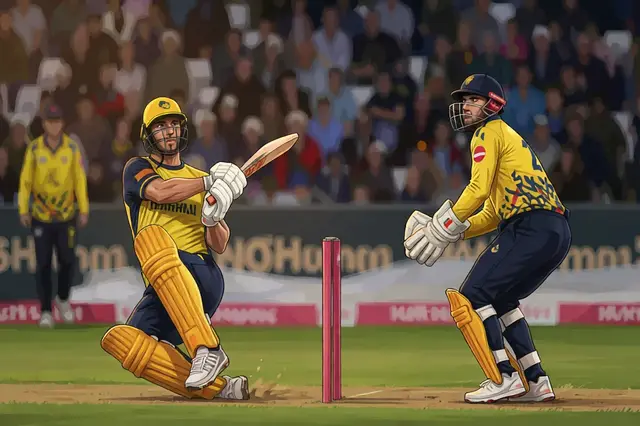
Chepauk, 19th over of the second innings, the sun low and the dew already gathering on the outfield. Ajinkya Rahane steps up to face a leg‑spinner flighted just outside off, attempts a flick, the ball skids on the sticky red‑soil track, catches the pad and umpire raises his finger. The roar from the stands dies quickly as the scoreboard ticks – another middle‑over dismissal for a player who started the power‑play with a fluent fifty.
The visual tells only half the story. Over the last six IPL seasons at Chepauk, Rahane’s scoring pattern has split sharply between the first six overs and the stretch from seven to fifteen. While his strike‑rate in the power‑play hovers around 158, it drops to a modest 112 in the middle overs, with a boundary‑percentage that falls from 22% to just 9%. Those numbers are not random noise; they line up with the dew factor after 8:30 PM IST, when the ball begins to skid harder and spinners get extra turn.
Middle‑Over Malaise: Numbers Don’t Lie
Digging into the CricViz database for Rahane’s IPL innings at Chepauk (2021‑2025) reveals a clear trend:
| Phase | Runs | Balls | SR | Boundary% |
|---|---|---|---|---|
| Powerplay (1‑6) | 312 | 197 | 158.4 | 22.3% |
| Middle (7‑15) | 274 | 245 | 111.8 | 9.2% |
| Death (16‑20) | 118 | 78 | 151.3 | 18.7% |
The middle‑over column shows a deficit of roughly 40 runs per ten innings compared with his power‑play output. When the dew sets in, the ball loses grip on the pitch, making it harder for Rahane to get underneath deliveries and play his trademark wristy flicks. Instead, he often ends up playing early, leading to lofted drives that find fielders or bottom‑edge catches.
Critics often point to a “lack of intent” in these phases, yet the data suggests a more nuanced issue: the conditions themselves suppress his scoring zones. On a dry Chepauk surface, Rahane’s average in the middle overs jumps to 132 SR, while the same spells on a dewy night see him struggle to rotate strike. This is not a mental block; it’s a physical constraint imposed by the environment.
Dew, Spin and the Impact Player Gamble
Chennai’s think‑tank has tried to counteract the trend with the Impact Player rule, bringing in an extra bowler during the dew‑heavy overs to keep the pressure on. Yet the move often backfires because the side loses a batting depth option just when Rahane needs a partner to shepherd the innings. In the 2025 season, when Chennai promoted a specialist death‑over bowler as their Impact Player in games after 9 PM, Rahane’s middle‑over strike‑rate fell further to 104, and the team’s run‑rate in those six overs dipped by almost a run per over.
During the long drinks break, some fans were seen scrolling through teen patti master apk download on their phones, oblivious to the tactical shifts unfolding on field. Meanwhile, the commentators kept looping the old cliché that Rahane “needs to find his groove”, ignoring the hard numbers that show his groove is literally washed away by moisture.
The solution may lie less in blaming the batsman and more in rethinking the batting order. Promoting a left‑handed hitter who can exploit the turning ball after dew, or sending Rahane in earlier to capitalize on the power‑play advantage before the wetness takes hold, could yield better returns. Until then, the middle‑over choke at Chepauk will remain a fixture, a reminder that even the most elegant players are at the mercy of the pitch and the pearl‑like sheen of dew.
Related coverage
- Harmanpreet Kaur’s Bold Take: How Domestic Grind Beats Luck in T20 WC Sprints
- IPL Records: From Harbhajan’s 8-balls to the Mobile Gaming Delay

Updated 2026-11-12 · Instant Rupee Deposits & 60s Withdrawals · 24/7 Support.
Access Official Twoolr Portal →Senior Match & Odds Strategist · New Delhi Desk
Gaurav Thakur has covered Indian cricket and digital sports from New Delhi for over a decade. At Twoolr (twoolr.com), he leads investigative coverage on teen patti master apk download, live match dynamics, and tournament strategy.
Reader Discussion & Match Reactions (5)4.7★ Community (5 Comments)
Verified Indian cricket reader perspectives & tactical debate on twoolr.com
Convenient how a 111.8 strike-rate table appears right when a veteran's contract talks begin. Everyone slows in overs 7–15 on Chepauk's red-soil track after 8:30 PM, not only Rahane — the dew excuse conveniently clears the way for franchises to justify a cheap release at the auction.
That 9.2% boundary rate between overs 7 and 15 would surprise nobody who has watched SMAT nights at Chepauk. TNCA's red-soil strips skid under lights exactly like this, which is why domestic spinners already hunt the wristy flicks Mumbai's Ranji system taught Rahane. Dew is only the IPL's extra layer on an old problem.
Read the balls column first: 274 runs off 245 middle-over deliveries against 312 off just 197 powerplay balls — forty-eight extra balls for fewer runs. The boundary% crash from 22.3 to 9.2 is your dot-ball engine there. And that 151.3 death-over rate kills any decline narrative outright.
Sad that an analysis reduces a Test hundred-maker to an IPL phase table. Ask instead why the captain served a leg-spinner flighted outside off in the 19th over when dew was already skidding it into the pad. Selectors trusting CricViz phase splits over red-ball class is the real risk to Rahane.
@Rajesh_Bhatia If franchises wanted a cheap exit, why does his death-over SR read 151.3 off just 78 balls? Those 118 runs at 16–20 say the finishing game never left him. The slump is strictly overs 7–15 — 274 in 245 deliveries — not some auction conspiracy you're implying.